

Join the 5%: Off-Trail Denali Taiga With the 4 Hour Wilderness Wonders Tour
4 Hours • Join the 5% Club and Go Off-Trail in Denali! • All Ages Welcome
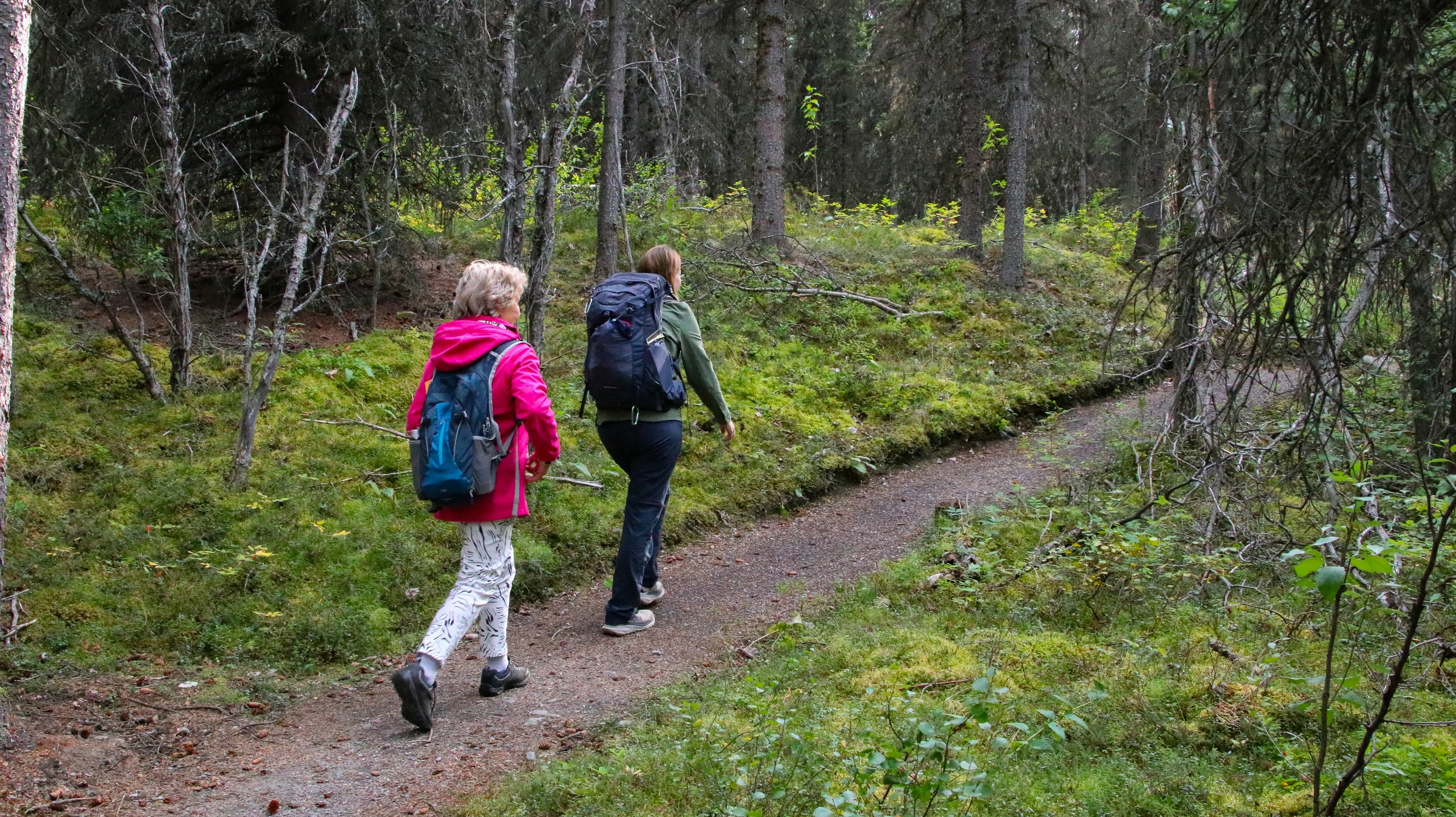
You step from the shuttle into a spruce-scented hush, the kind of quiet that seems to listen back. The ground answers with a springy give—thick moss rising to meet your boot like a memory-foam mattress laid across the forest floor. Your guide smiles and gestures toward the treeline. No boardwalk. No blaze. Just the boreal forest inviting you in. This is the promise of the 4 Hour Wilderness Wonders Tour, an off-trail wander through Denali’s taiga—just outside the park boundary, where guides are free to leave the path and follow the patterns of the land.
Trail Wisdom
Wear pants, not shorts
Off-trail brush and dwarf birch can scratch bare legs; lightweight hiking pants prevent irritation and snagging.
Step on the high spots
Aim for firm hummocks and roots to stay drier and minimize impact on soft muskeg.
Bug strategy matters
In summer, use repellent on cuffs, wrists, and neck, and consider a head net if mosquitoes are heavy.
Embrace a slow cadence
Off-trail hiking rewards patience—watch your footing, pause to scan for wildlife, and let the group re-gather often.
Local Knowledge
Hidden Gems
- •Otto Lake near Healy for mirror-calm reflections and sunset light
- •Horseshoe Lake Trail for an easy add-on stroll with beaver dams and river views
Wildlife
Moose, Willow ptarmigan
Conservation Note
The taiga’s mossy mat protects shallow soils over permafrost. Walk softly, keep groups tight through sensitive areas, and harvest berries sparingly so wildlife retains key food sources.
Athabaskan peoples have stewarded this land for millennia; the modern tourism corridor grew after the Alaska Railroad reached the area in 1923.
Seasonal Guide
spring
Best for: Quiet forests before peak visitation, Fresh wildlife tracks in soft ground
Challenges: Wet, muddy muskeg, Unpredictable shoulder-season weather
Late May to June brings long daylight and thawing trails. Expect soggy footing and layered weather—sunbreaks, wind, and squalls in the same afternoon.
summer
Best for: Berry sampling (late July–August), Lush green taiga and mild temps
Challenges: Mosquitoes, Frequent rain showers
July through August is peak season: vibrant forest, chance for berries, and comfortable temps. Come prepared for bugs and intermittent rain.
fall
Best for: Fiery tundra colors, Cooler, bug-light days
Challenges: Early frosts, Shortening daylight
September shifts the palette to gold and crimson, with crisp mornings and fewer insects. Layers are key as temperatures drop quickly.
winter
Best for: Solitude and silence, Occasional aurora displays at night
Challenges: Deep snow, Limited daylight; many tours pause operations
From late fall to early spring, conditions are wintry and daylight is short. This specific tour may not operate; if it does, expect snow travel and very cold temps.
Photographer's Notes
What to Bring
Waterproof hiking bootsEssential
Sturdy, waterproof boots keep feet dry and stable on moss, roots, and boggy sections.
Lightweight rain jacket (provided if needed)
Showers move quickly—stay dry without overheating during stop-and-go exploration.
Quick-dry hiking pants or gaitersEssential
Brush and wet moss soak fabrics; quick-dry layers or gaiters shed water and protect legs.
Bug head net and repellent
A head net plus repellent makes peak mosquito days comfortable so you can focus on the forest.
Common Questions
How far will we hike and how much elevation will we gain?
Expect roughly 3–4 miles and 200–300 feet of gentle elevation over four hours, adjusted to the group since the route is off-trail.
Is this inside Denali National Park?
No. Guided off-trail hiking isn’t permitted inside the park, so the tour operates just outside the park boundary in similar taiga terrain.
What happens if it rains?
Trips run in rain; lightning is the primary weather cancellation. Rain jackets are available and the forest is beautiful in wet conditions.
Is it family friendly?
Yes. All ages are welcome with attentive supervision for small children. The pace and route are tailored to the group.
Will we see wildlife?
Wildlife sightings vary. Squirrels are common; moose, ptarmigan, eagles, and weasels are occasional. The focus is on habitat and behavior, not guaranteed encounters.
What should I wear on my feet?
Waterproof hiking boots with good tread are recommended. Expect soft, uneven ground, and possible wet spots in the moss.
What to Pack
Waterproof boots for soft, wet ground; lightweight layers to adapt to shifting weather; bug protection (repellent and optional head net) for peak summer; a 1–2 liter water bottle to stay hydrated without relying on streams.
Did You Know
Denali National Park and Preserve protects over 6 million acres yet has just one 92-mile road, leaving most of the landscape roadless and wild.
Quick Travel Tips
Base in Denali Park or Healy for quick pickup; bring snacks since no food is provided; cell coverage is spotty near the park—download maps and confirmations; confirm pickup time via the guide’s text the evening prior (typically before 7 pm).
Local Flavor
After your walk, head to 49th State Brewing in Healy for halibut tacos and a local pint, or try Prospector’s Pizzeria in Denali Park for wood‑fired pies. If you have time, swing by the Alaska Railroad depot to watch trains roll through a slice of frontier history.
Logistics Snapshot
Closest airports: Fairbanks (FAI, ~2 hours by car) and Anchorage (ANC, ~4.5–5 hours). Pickup: Included within ~20 miles of the Denali park entrance. Driving: Denali Park to meet-up areas can be 5–20 minutes. Cell service: Patchy to poor once you leave the highway. Permits: None required for this guided off‑trail tour outside the park.
Sustainability Note
The boreal forest stores immense carbon in moss and permafrost. Step on durable surfaces where possible, pack out all trash, and limit foraging to small tastes so wildlife retains its seasonal food sources.
Continue Reading

Canyon Wave: Rafting Denali’s Glacial Heart on the Nenana River
The Nenana River doesn’t whisper—it urges you forward. On the Canyon Wave run, you’ll punch through crisp, glacial rapids beneath Denali’s ramparts, trading roadside views for a front-row seat to Alaska’s wild hydraulics. Cold water, big smiles, and a canyon that knows how to keep pace.
Healy, Alaska
Chasing Light in Denali: An Afternoon Hike Across Taiga and Tundra
Trade the tour bus for tundra. This guided afternoon hike threads from shadowed spruce to open ridgeline, where Denali’s valleys breathe wide and the wind calls the cadence. Come for the views, stay for the stories beneath your boots.
Denali Park, Alaska